Research & Development

Thinking ahead to induction heating

For us, being a technology leader is more than just a claim. Every year, we invest between five and ten percent of our sales volume in the further development of our expertise in induction heating.

A key focus of this leading induction strategy is collaboration with national and international research institutions. We support scientists in the further development of promising applications.

We introduce some of our project partners here.

Collaborations with Universities & Research Institutions

We increase the efficiency

Whether plasma generation at ITER, pulse hardening or the soldering of chips – when it comes to sustainability, climate protection and efficiency, we are happy to be involved.
Learn more about one of these projects here.
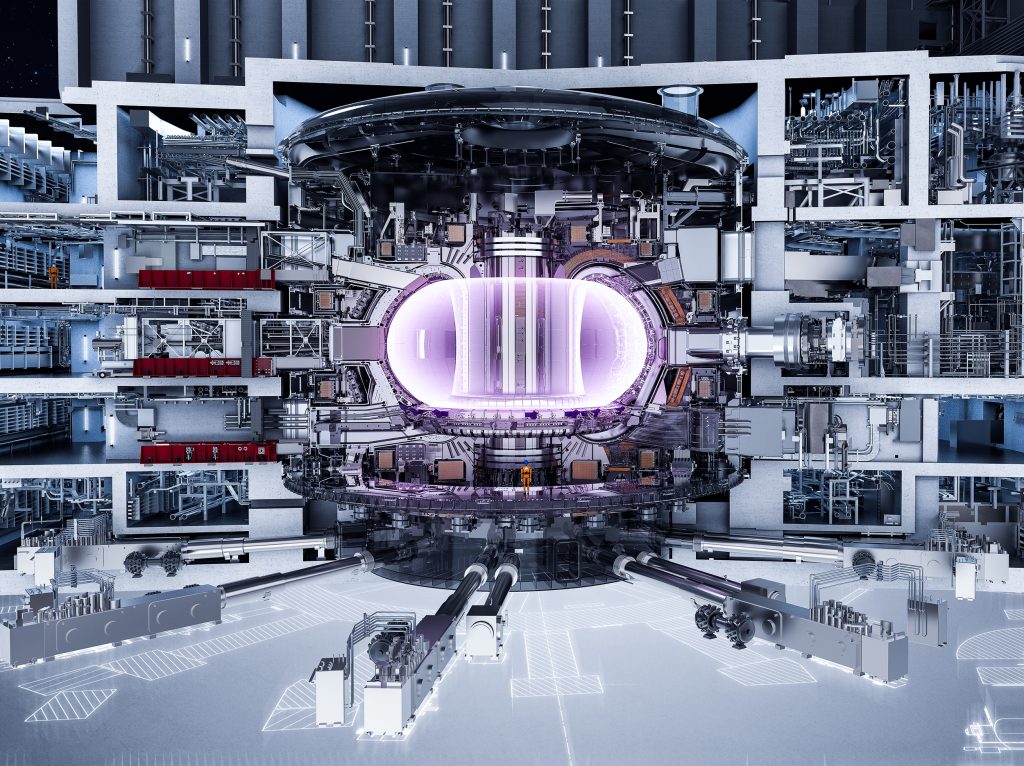
3D representation of the ITER nuclear fusion reactor

Publicly funded Projects – industry-oriented and application-related

We don’t just want to do research, we want to make inductive processes better for industry in a very concrete and practical way. That is why we regularly work on publicly funded projects for SMEs.
Logo ZIM Zentrales Innovationsprogramm Mittelstand

Since 1950, Himmelwerk has shipped more than 19,000 high and medium frequency converters worldwide.
By how much can you reduce your CO₂ emissions per year? Let’s have a look.

Assumption 1: 25% of your converters are still operational.

Assumption 2: They have an average output of 6 kW and thus a power consumption of 7 kW.

Assumption 3: These generators are operational 8 hrs per day and 5 days per week.

Assumption 4: Inductive heating uses up to 40% less energy than conventional methods. Let’s assume 30%.

With these assumptions, our calculation would look like this: Daily energy consumption: 8 hrs x 7 kW = 56 kW

Energy savings per day: 56 kWh / 0.7 = 80 kWh; 80 – 56 = 24 kWh

Total energy savings per day: 24 kWh x 4,750 converters = 114,000 kWh

Total energy savings per year: 220 working days x 114,000 kWh = 25,080,000 kWh

Conversion factor kWh/CO₂: 1 kWh is equivalent to approx. 0.485 kg of CO₂ (source: German Federal Environmental Agency, Climate Change 15/2022)

CO₂ reduction per year: 25,080,000 kWh x 0.485 kg = 12,163,800 kg